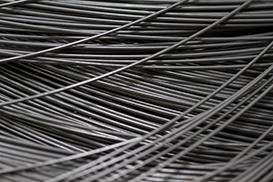
冷镦线材(Cold Heading Quality Wire,简称 CHQ 线材)是一种专门用于冷成型工艺(如冷镦、冷挤压)的高性能金属材料。
Cold Heading Quality Wire (CHQ Wire) is a high-performance metallic material specifically designed for cold forming processes, such as cold heading and cold extrusion.
-----------
简单来说,它就像是工业界的“超强橡皮泥”——在不加热的情况下,通过巨大的压力让金属线材在模具中“流动”,最终变成螺栓、螺母或各种复杂形状的零件。
To put it simply, it acts like the "industrial version of high-strength Play-Doh"—it allows metal wire to "flow" within a mold under immense pressure without being heated, eventually transforming into bolts, nuts, or various complex-shaped parts.
1. 核心特性:为什么它与普通钢丝不同?
普通的钢丝如果强行压扁,容易产生裂纹或断裂。而 CHQ 线材 必须具备以下“硬核”素质:
·极高的塑性(可塑性): 能够承受剧烈的变形而不开裂。
·优异的表面质量: 表面不能有划痕、裂纹或拉伤,因为任何微小的缺陷在冷镦瞬间都会被放大成致命的裂口。
·成分纯净: 内部杂质(如硫、磷)含量极低,组织均匀,确保每一寸线材的强度和韧性一致。
·尺寸精度: 线径的公差通常控制在微米级,以保证能顺利进入高速运转的冷镦机。
While ordinary steel wire is prone to cracking or breaking if forcibly flattened, CHQ wire must possess the following "hardcore" qualities:
·Extremely High Plasticity (Formability): It can withstand severe deformation without cracking.
·Excellent Surface Quality: The surface must be free of scratches, cracks, or pull marks, as any microscopic defect will be magnified into a fatal fracture during the instantaneous cold heading process.
·Pure Composition: It has an extremely low content of internal impurities (such as sulfur and phosphorus) and a uniform microstructure, ensuring consistent strength and toughness throughout every inch of the wire.
·Dimensional Precision: Wire diameter tolerances are typically controlled at the micron level to ensure smooth feeding into high-speed cold heading machines.
2. 生产流程:如何炼成一卷 CHQ 线材?
典型的生产流程通常包含以下关键步骤:
·原材料选择: 选用优质低碳钢(如 C10C)、中碳钢(如 35K)或合金钢(如 10B21、SCM435)的热轧盘条。
·酸洗磷化(Pickling & Coating): 用酸除去表面的氧化皮,并涂上一层磷化膜或润滑剂。这层“外衣”非常关键,它能在冷镦时减少模具摩擦。
·精拔(Drawing): 通过拉丝机将粗大的盘条拉细到目标直径,这一步会提高材料的强度。
·退火(Annealing): 如果材料太硬,需要进入退火炉进行热处理,使其变软,恢复塑性。
·成品检验: 包括金相分析(看内部组织)、拉伸测试和最重要的冷顶锻试验(将一段线材压扁到原始高度的 1/3,观察是否开裂)。
A typical production flow involves the following key steps:
·Raw Material Selection: High-quality hot-rolled wire rods made of low-carbon steel (e.g., C10C), medium-carbon steel (e.g., 35K), or alloy steel (e.g., 10B21, SCM435) are selected.
·Pickling & Coating: Acid is used to remove surface scale, followed by the application of a phosphate coating or lubricant. This "outer layer" is crucial for reducing mold friction during cold heading.
·Fine Drawing: A drawing machine pulls the thick wire rod down to the target diameter, a step that increases the material's strength.
·Annealing: If the material becomes too hard, it enters an annealing furnace for heat treatment to soften it and restore its plasticity.
·Finished Product Inspection: This includes metallographic analysis (examining internal structures), tensile testing, and the critical Cold Upsetting Test (compressing a section of wire to 1/3 of its original height to check for cracks).
3. 应用场景:它变成了什么?
冷镦线材是紧固件行业的“粮食”。你身边几乎所有金属连接件都源于此:
·汽车行业: 发动机螺栓、轮毂螺栓。
·建筑行业: 高强度螺栓、植筋螺栓。
·电子/家电: 手机微型螺钉、空调压缩机零件。
·航空航天: 特种高强度铆钉。
CHQ wire is the "bread and butter" of the fastener industry. Nearly all metal connectors around you originate from it:
·Automotive Industry: Engine bolts, wheel bolts.
·Construction Industry: High-strength bolts, chemical anchors/rebar bolts.
·Electronics/Appliances: Micro-screws for mobile phones, air conditioner compressor parts.
·Aerospace: Special high-strength rivets.
4. 行业黑话:什么是“球化退火”?
在和客户沟通时,经常会提到退火状态。球化退火(Spheroidizing) 是最高端的工艺,它能让钢材内部的碳化物变成球状,提供极致的塑性,适合生产形状复杂的非标件(异形件)。
When communicating with clients, the annealing state is frequently discussed. Spheroidizing Annealing is a high-end process that transforms the carbides within the steel into a spherical shape. This provides ultimate plasticity, making it ideal for producing non-standard (special-shaped) parts with complex geometries.